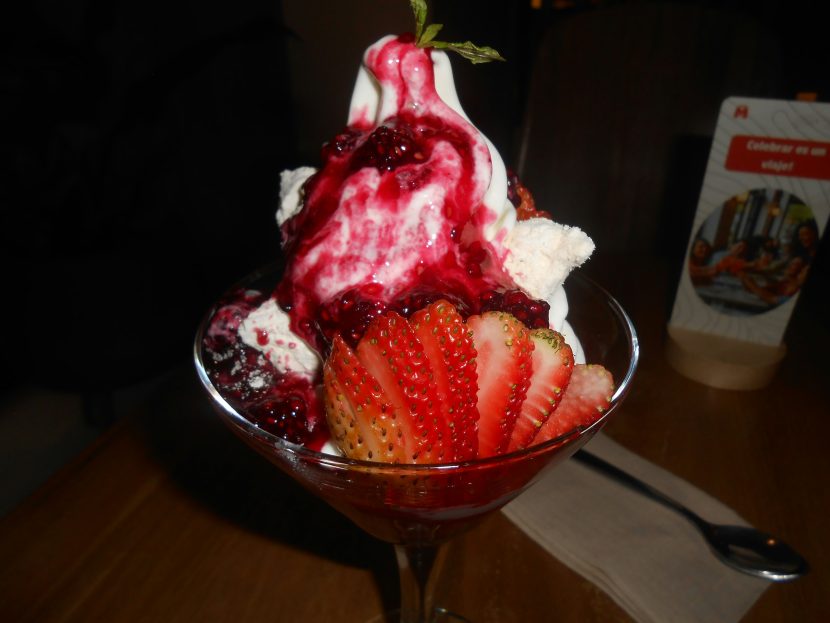
Jose Mier here in Sun Valley, CA, once again elbow-deep in the internet’s frozen dessert archives, and this time I came out the other side holding what looked, from across the kitchen, like a plate of spaghetti and marinara. It was not spaghetti and marinara. It was ice cream pretending, very convincingly, to be spaghetti and marinara, and I regret nothing about the forty-five minutes I spent trying to get the “noodles” just right.
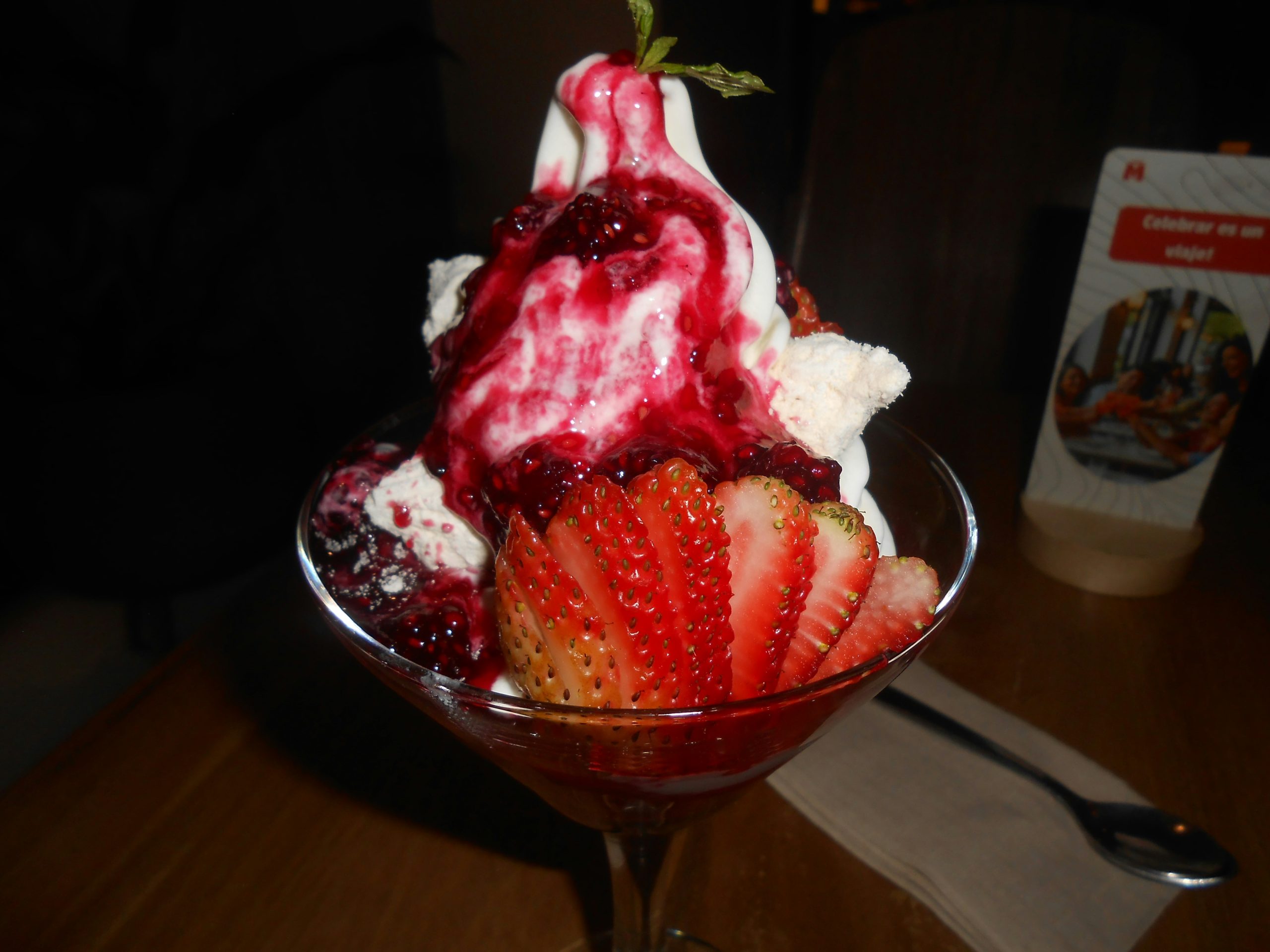
The Recipe I Used
I worked from the Homemade Spaghettieis recipe from Kitchen Stories, which lays out the whole German ice cream sundae in refreshingly few steps: whipped cream on the bottom, vanilla ice cream pressed through a potato ricer on top to form “noodles,” and a strawberry sauce finished with grated white chocolate or coconut standing in for the “parmesan.” The recipe is simple enough that the hardest part is genuinely just the ricer technique, and even that is more about patience than skill. I will admit to feeling a small, ridiculous sense of triumph the first time a strand of vanilla ice cream came out looking convincingly like fettuccine.
An Ice Cream Sundae Built on a Visual Pun
Spaghettieis was invented in 1969 by Dario Fontanella, a seventeen-year-old whose father ran an ice cream parlor in Mannheim, Germany. Fontanella came from an Italian immigrant family, which makes the whole concept make a lot more sense once you know it: this is a dessert built by someone steeped in pasta culture, translating the visual language of a plate of spaghetti directly into ice cream form, presumably at least partly for the fun of it. The genius of the idea is really in the presentation rather than any single ingredient. Vanilla ice cream forced through a ricer or a spätzle press comes out looking uncannily like pasta strands, strawberry sauce reads instantly as marinara from across a room, and shaved white chocolate or coconut flakes complete the illusion by standing in for grated parmesan. Nothing about the flavors is unusual on its own, plain vanilla ice cream with strawberry sauce is about as classic as ice cream gets, but the presentation turns a familiar flavor combination into something people specifically travel to order.
How a Novelty Sundae Became a National Fixture
What started as one ice cream parlor’s clever idea in Mannheim eventually spread to become a fixture on menus at ice cream shops, known as Eisdielen, across all of Germany. It is genuinely hard to overstate how normal Spaghettieis is there, it shows up on menus next to standard scoops and sundaes with no fanfare, treated as a completely ordinary dessert option rather than a novelty item. That is a little surprising given how visually strange the dish is to anyone encountering it for the first time, but it speaks to how thoroughly the idea took root once it caught on. Part of the appeal is clearly the humor built into the dish itself, there is something inherently funny about being handed a bowl that looks exactly like dinner when you were expecting dessert, and that joke apparently never really gets old, since the dessert has stuck around for more than fifty years without becoming dated or gimmicky in the way a lot of novelty foods eventually do.
Getting the Noodle Illusion Right
The entire trick of Spaghettieis lives or dies on the texture and shape of the “noodles,” and getting that part right takes a bit more finesse than it looks like it should. The vanilla ice cream needs to be soft enough to push through a ricer or spätzle press without turning into mush, but not so soft that the strands collapse the moment they hit the plate. Most home versions solve this by letting the ice cream sit out for ten to fifteen minutes before pressing, just enough to take the edge off without fully softening it, and chilling the serving bowls and the ricer itself in the freezer beforehand so the strands do not start melting the instant they land. The pressing motion itself is oddly satisfying once you get a feel for it, steady and even pressure produces long, consistent strands, while pressing too hard or too fast tends to produce short, clumped pieces that look more like broken pasta than a proper plate of spaghetti.
Variations on the Original Bit
Once you understand Spaghettieis as fundamentally a visual joke rather than a fixed recipe, the variations basically write themselves. The classic version uses strawberry sauce as the “marinara” and white chocolate or coconut shavings as the “parmesan,” but some versions swap in dark chocolate sauce and chopped nuts instead, deliberately styled to look more like a carbonara or a meat sauce than a simple tomato base. A few American adaptations have gone even further and worked in small pieces of brownie to stand in for meatballs, essentially building a full spaghetti-and-meatballs illusion out of dessert ingredients. None of these variations change the underlying mechanics much, it is still ice cream pressed into noodle shapes with a sauce and a garnish layered on top, but the specific choices in sauce and topping decide whether the final plate reads as a simple marinara dish or something closer to a full Italian dinner spread.
Why the Illusion Works So Well
Part of what makes Spaghettieis so effective is how deliberately it plays with expectation. Ice cream sundaes have a fairly predictable visual vocabulary, scoops, swirls, sauce drizzled over the top, and Spaghettieis breaks that pattern completely by borrowing the visual language of an entirely different meal category. Your brain, presented with a plate of pale strands topped with a red sauce and a light garnish, reaches for “pasta dinner” long before it reaches for “dessert,” and that split second of confusion is really the whole point. It is a similar trick to what makes a well-done trompe-l’oeil painting fun to look at, the pleasure comes from your perception being cleverly redirected and then corrected once you take a bite and the sweetness gives the game away immediately. Very few desserts commit this hard to a single visual bit, which is part of why Spaghettieis has remained a novelty worth talking about more than half a century after it was invented, rather than fading the way most one-note gimmicks eventually do.
Finding It Outside Germany
Spaghettieis has made its way onto menus outside Germany over the years, particularly at German-style bakeries, biergartens, and ice cream parlors run by or catering to German expatriate communities, though it remains far less common in the United States than standard sundae options. That relative rarity is part of what makes it fun to introduce to people who have never encountered it, since the reaction is almost always the same mix of confusion and delight the moment the bowl hits the table. If you happen to travel to Germany, ordering it at an actual Eisdiele is worth doing at least once simply to see the “professional” version, made with a proper spätzle press and years of practiced technique, before you head home and try to recreate it with whatever kitchen tools you have on hand.
Notes From My Sun Valley Kitchen
My first attempt taught me that the potato ricer step is genuinely the whole ballgame here. I did not have a spätzle press on hand, so I used a standard potato ricer with the largest holes I owned, and the strands still came out looking convincingly noodle-like, which was a relief given how much I had built up the difficulty of this step in my head beforehand. I also learned the hard way that room-temperature ice cream squeezes through beautifully but melts distressingly fast once it hits the plate, so pre-chilling the serving bowls in the freezer, as most recipes recommend, is not an optional step you can skip to save time. Skipping it, as I did on my very first try, gets you a bowl of strawberry-topped ice cream soup rather than a bowl of ice cream spaghetti, and while it still tasted fine, it lost every bit of the visual gag that makes this dessert worth making in the first place.
Below is a video that covers both the history and the technique well, which is worth a watch before you attempt your first batch.
Why I Keep Digging Up Desserts Like This
Most of what I chase down for this site earns its place because of flavor or technique, but Spaghettieis earns its place almost entirely on charm. It is not a complicated dessert, and the flavors involved, vanilla, strawberry, and white chocolate, are about as unadventurous as ice cream gets. What makes it worth making is the sheer commitment to the bit, a seventeen-year-old in Mannheim in 1969 looked at an ice cream parlor and decided the food should also be a visual joke, and more than fifty years later people are still doing exactly that in kitchens they have never even been to. That is the kind of frozen dessert history that makes all the scrolling worthwhile.