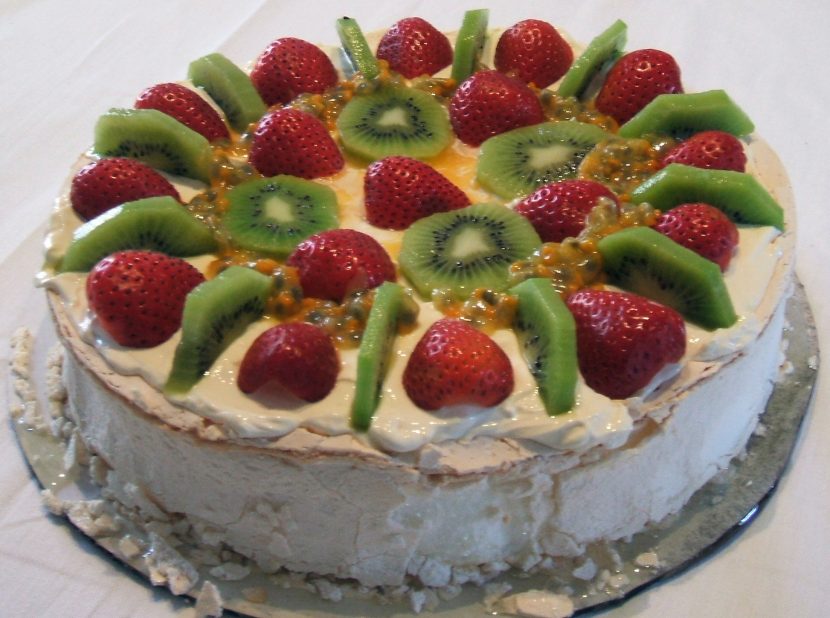
Jose Mier here in Sun Valley, California, and I have a confession: I believe dessert should occasionally make a grand entrance. A bowl of ice cream is a beautiful thing, but sometimes I want a dessert that arrives at the table looking as if it has its own publicist. That is why I’ve been exploring frozen pavlova, a spectacular mash-up of crisp meringue, creamy filling, fruit, and the cool satisfaction of an ice cream cake.
What exactly is frozen pavlova?
Traditional pavlova is a meringue-based dessert with a crisp outer shell and a soft, marshmallow-like center. It is usually topped with whipped cream and fresh fruit. Australia and New Zealand both claim a special connection to the dessert, which is named after Russian ballerina Anna Pavlova. The classic version is already a showstopper, but freezing takes it in a new direction: instead of simply topping a meringue with cream and berries, this version layers strawberry ice cream and lemon-kissed whipped cream on a cookie crust, then crowns the whole creation with baked meringue.
The result is a dessert with contrasting textures and temperatures. There is a buttery crunch at the bottom, cold strawberry ice cream in the middle, airy meringue above, and bright fruit to finish. It’s a little like an ice cream cake that went to finishing school.
The recipe that inspired my kitchen experiment
For this version, I’m using the Frozen Pavlova recipe from Food Network Kitchen, courtesy of Amy Stevenson. It combines strawberry ice cream, lemon curd folded into whipped cream, a shortbread-cookie crust, and a classic baked pavlova topped with strawberries and more whipped cream. The recipe serves approximately eight to ten people and takes about four hours and 45 minutes overall, much of which is hands-off chilling and cooling time.
That last detail matters. This is not the dessert I start when guests text, “We’re parking now.” It’s a make-ahead project. I prefer to prepare the ice cream cake and meringue earlier, then assemble everything just before serving. My guests get a dramatic dessert, and I get to look as though I planned ahead. Both are important culinary outcomes.
The main components
The shortbread crust is simple: crushed cookies mixed with melted butter, a little sugar, and a pinch of salt. Press it into the bottom of a springform pan and bake until set. It creates a firm, buttery foundation and helps keep the creamy layers from feeling one-note.
Next comes strawberry ice cream. Let it soften just enough to scoop and spread, but don’t let it turn into a milkshake. The recipe layers the ice cream with whipped cream folded together with lemon curd. The lemon adds tartness that keeps the dessert from becoming overwhelmingly sweet, while the whipped cream softens the texture and helps create those pretty pale-yellow swirls. Once layered, the cake needs several hours in the freezer to become firm.
The pavlova topper is made by whipping egg whites with cream of tartar and salt, then gradually adding confectioners’ sugar until the mixture forms stiff, glossy peaks. Vanilla gives it a familiar fragrance. The meringue is shaped into a round with a shallow dip in the center, baked slowly at a low temperature until crisp outside, and cooled completely. Don’t rush this stage: meringue appreciates patience more than it appreciates a chef hovering over it every four minutes.
Why meringue needs a little respect
Egg whites are wonderfully versatile, but they can be fussy. Make sure your mixing bowl and whisk are clean and free of grease, and avoid getting yolk into the whites. Add the sugar gradually rather than dumping it all in at once. The finished mixture should look shiny and hold its shape when you lift the whisk.
Cracks in a pavlova are not a catastrophe. The dessert is meant to have a rustic, cloudlike appearance, and this frozen version will be covered with cream and fruit anyway. I consider a crack in meringue a design feature. In my kitchen, we call that “artisan texture.”
Strawberries, lemon, and a little last-minute magic
To finish, fresh strawberries are tossed with lemon zest, lemon juice, and a small amount of sugar. A brief rest helps the fruit become glossy and releases a little juice. Whip the remaining cream with confectioners’ sugar and vanilla, place the cooled meringue on top of the frozen cake, and fill its center with cream and berries.
The timing is important: assemble the dessert shortly before serving. Moisture from whipped cream and fruit will gradually soften the meringue, and the frozen cake should stay in the freezer until you are ready to crown it. For clean slices, use a sharp knife and wipe it between cuts. If the cake is rock-hard, give it a few minutes to relax before slicing; no need to arm-wrestle your dessert.
Ways to make the recipe your own
Strawberry and lemon are a natural pairing, but frozen pavlova is flexible. Raspberry ice cream with lime curd would bring a sharper berry flavor. Vanilla ice cream with passion fruit curd would give the cake a tropical edge. For a summer gathering, I might scatter a few raspberries and blueberries among the strawberries for extra color.
You can also change the cookie base. Shortbread gives a buttery, delicate crunch, while graham crackers bring a honeyed note. Keep the crust thin enough that it doesn’t overpower the ice cream. If you experiment with a different ice cream flavor, think about balance: the best version has sweetness, acidity, creaminess, and crunch all working together.
A dessert with a little history and a lot of personality
Pavlova’s origins are famously debated between Australia and New Zealand, and its name recalls the touring ballerina Anna Pavlova in the 1920s. Whatever the exact origin story, the dessert has become a favorite for celebrations because it looks impressive without requiring elaborate decoration. The frozen variation borrows that celebratory spirit and combines it with the familiar pleasure of ice cream cake.
For me, that is the charm of frozen desserts: they invite tradition and improvisation to share the same plate. A meringue can be delicate, an ice cream cake can be playful, and strawberries can make the whole thing feel fresh. Put them together and you have a dessert that is equally at home at a birthday dinner or a sunny afternoon get-together in Sun Valley.
Watch a pavlova come together
This video demonstrates the classic pavlova technique—whipped meringue, cream, and fruit—which is the finishing inspiration for the frozen version. The ice cream-cake assembly follows the written Food Network recipe linked above.
Frozen pavlova asks for a little planning, but the payoff is a dessert with layers of flavor, texture, and theater. I’ll happily put in the extra freezer time for a cake that delivers crisp meringue, creamy strawberry filling, tangy lemon, and juicy berries in every slice. Now, if you’ll excuse me, I need to clear a little space in my freezer. A chef’s work is never done—and neither is dessert.