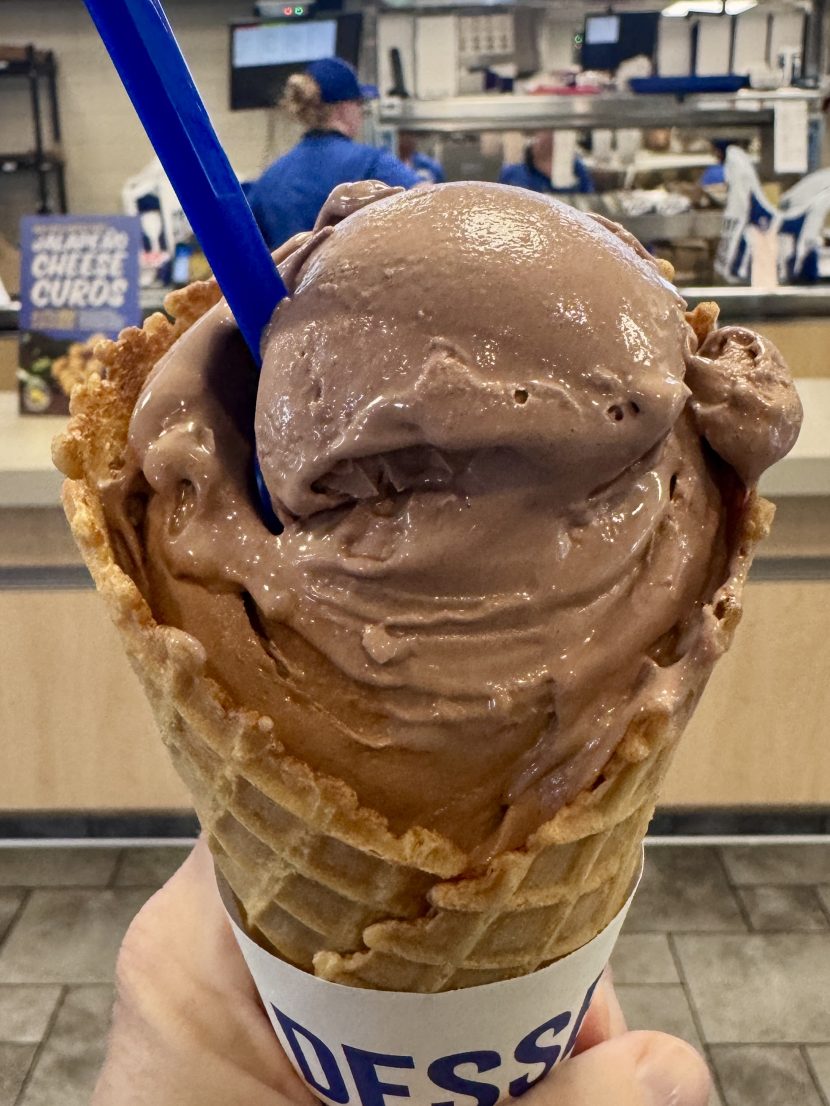
Jose Mier has spent plenty of time hunting for frozen desserts, but I recently realized there is one classic American treat I had somehow never given its own proper investigation: frozen custard. That seemed like a pretty serious omission for a chef living in Sun Valley, California, so I decided to correct it. Frozen custard may look like ice cream, but its extra egg yolks give it a richer, denser character that makes it something worth treating as its own dessert.
For this article, I went straight to a recipe from Joshua Weissman, whose homemade soft-serve frozen custard uses cream, milk, sugar, vanilla and egg yolks. The recipe also includes instructions for making homemade waffle cones. I appreciate a dessert that arrives with its own edible serving dish.
What Makes Frozen Custard Different?
The short answer is eggs. Traditional ice cream can be made in several different styles, including recipes that contain no eggs at all. Frozen custard, by contrast, is built around egg yolks. Those yolks contribute fat, richness and a wonderfully smooth texture.
There is also a technical side to the difference. The base has to be heated carefully enough to thicken the egg yolks without scrambling them. That means frozen custard rewards patience. I have learned that whenever a recipe says “stir constantly,” it is probably not the moment to wander away and check what is happening in the refrigerator.
A Dessert With American Roots
Frozen custard has a particularly strong connection with the American Midwest and old-fashioned roadside dessert stands. Wisconsin is especially associated with the treat, but frozen-custard stands can be found in many parts of the country. The dessert became a natural companion to summer outings, boardwalks, drive-ins and neighborhood gatherings.
That history is part of the appeal for me. Frozen custard is not trying to be mysterious. It is straightforward, rich and designed to be eaten shortly after it is made. In an era when desserts sometimes arrive with enough decoration to require an instruction manual, I find that refreshing.
The Recipe I Found
Joshua Weissman’s recipe starts with heavy cream, whole milk, sugar, salt, vanilla bean and seven egg yolks. The dairy mixture is heated to about 175 degrees Fahrenheit, while the egg yolks are tempered gradually with the hot cream. The yolks then return to the pot, where the mixture is cooked until it thickens enough to coat the back of a spoon.
After straining, the custard is cooled over an ice bath before going into an ice cream maker. That cooling step is important. You want the mixture thoroughly chilled before churning, rather than trying to freeze a hot dairy mixture and wondering why your freezer has suddenly become your enemy.
The recipe also gives instructions for homemade waffle cones. I consider that optional but highly entertaining. A scoop of freshly churned frozen custard in a homemade cone is the sort of dessert that can make a normal Tuesday feel considerably more important.
Why the Egg Yolks Matter
Egg yolks do more than simply make the recipe richer. They help create the characteristic texture that makes custard so satisfying. When properly cooked and incorporated, they contribute body and a silky mouthfeel.
The trick is temperature control. Too little heat and the custard will not thicken properly. Too much heat and you risk turning a smooth dessert base into something resembling sweet scrambled eggs. I strongly prefer the first outcome.
My Favorite Part: The Texture
For me, texture is where frozen custard really earns its place in the frozen-dessert lineup. It should feel dense and creamy rather than fluffy. A spoon should move through it with some resistance, and the dessert should melt slowly enough that you get plenty of flavor before it disappears.
Vanilla is a particularly good way to appreciate that texture because there are no complicated flavor combinations competing for attention. The cream, eggs and vanilla have to do the talking. Fortunately, they have quite a lot to say.
Ways to Make It Your Own
Once the basic technique is understood, there are plenty of directions a home cook can take. Chocolate can be added to the base for a deeper dessert, while fruit can bring brightness. Nuts, caramel, chocolate pieces or sauces can turn a simple custard into something more elaborate.
I would start with the basic vanilla version before getting too ambitious. That gives you a reference point. Once you know what properly made frozen custard tastes and feels like, you can start experimenting. And because I am writing this from Sun Valley, I feel obligated to mention that a warm evening and a cold bowl of custard make a very convincing combination.
Frozen Custard in the Sun Valley Kitchen
Sun Valley may not be the Midwest, but I see no reason why a dessert with Midwestern roots cannot make itself comfortable in Southern California. In fact, our warm weather gives me a pretty good excuse to keep frozen desserts in regular rotation.
I also like the fact that frozen custard is a technique-driven dessert. There is no need for a dozen unusual ingredients. The challenge is in preparing the custard properly, cooling it thoroughly and churning it into that dense, creamy texture. For a chef who enjoys learning how different desserts work, that is half the fun.
Watch Frozen Custard Come Together
If you would rather see the process than simply read about it, Joshua Weissman also demonstrates his homemade soft-serve frozen custard in a YouTube video. Watching the custard thicken and then move into the churning stage makes the technique much easier to visualize.
My Verdict on Frozen Custard
Frozen custard may share some territory with ice cream, but I think it deserves its own place on the dessert map. The egg yolks create a noticeably rich texture, the preparation rewards careful cooking, and the finished dessert feels substantial without requiring a complicated list of ingredients.
Most importantly, I have found another frozen dessert worth making in my Sun Valley kitchen. My freezer is beginning to resemble a small culinary research laboratory, which is probably not a bad thing unless somebody else wants to use the ice tray.