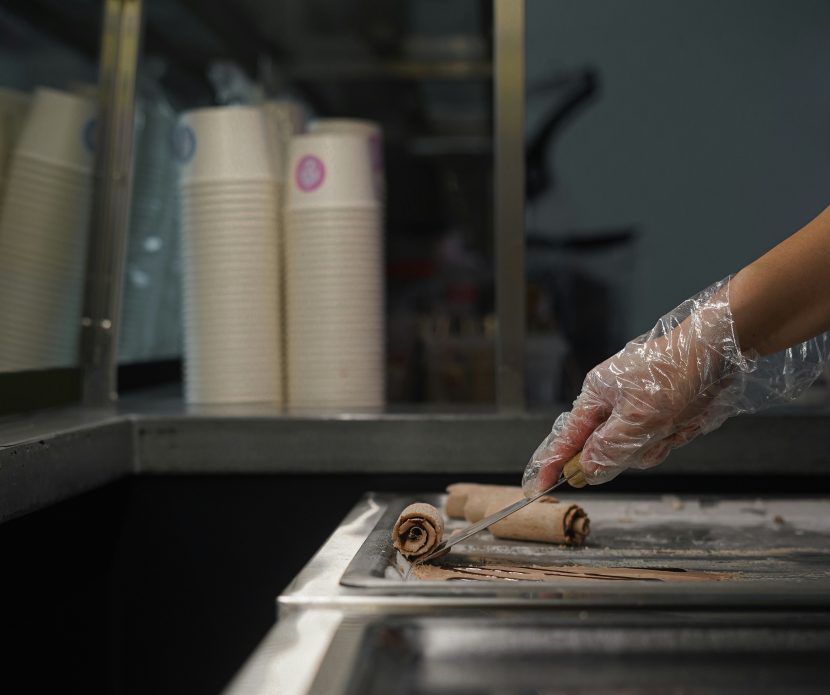
Jose Mier back at it again, hunting frozen dessert ideas from my kitchen here in Sun Valley, CA, where I have apparently decided that my life’s mission is to make every single frozen treat on the internet before I run out of freezer space. This week’s find is one I had genuinely never attempted before, despite having watched approximately four hundred videos of strangers making it: Thai rolled ice cream, also known as stir-fried ice cream, the stuff that turned “watching your dessert get made” into its own form of entertainment.
Where I Found the Recipe
I ended up using the Rolled Ice Cream (Thai Stir-Fried Ice Cream) recipe from IzzyCooking, which strips the whole thing down to two base ingredients, heavy cream and condensed milk, plus whatever mix-ins you want chopped in. No ice cream machine required, which felt like a trap at first because everything I know about frozen desserts told me a machine should be involved somewhere. It is not. You are simply freezing a flavored cream mixture on a flat tray and then scraping it up into rolls with a metal spatula, which sounds suspiciously simple for something that looks so impressive coming out of a street cart in Bangkok.
A Dessert That Started on a Cold Steel Plate
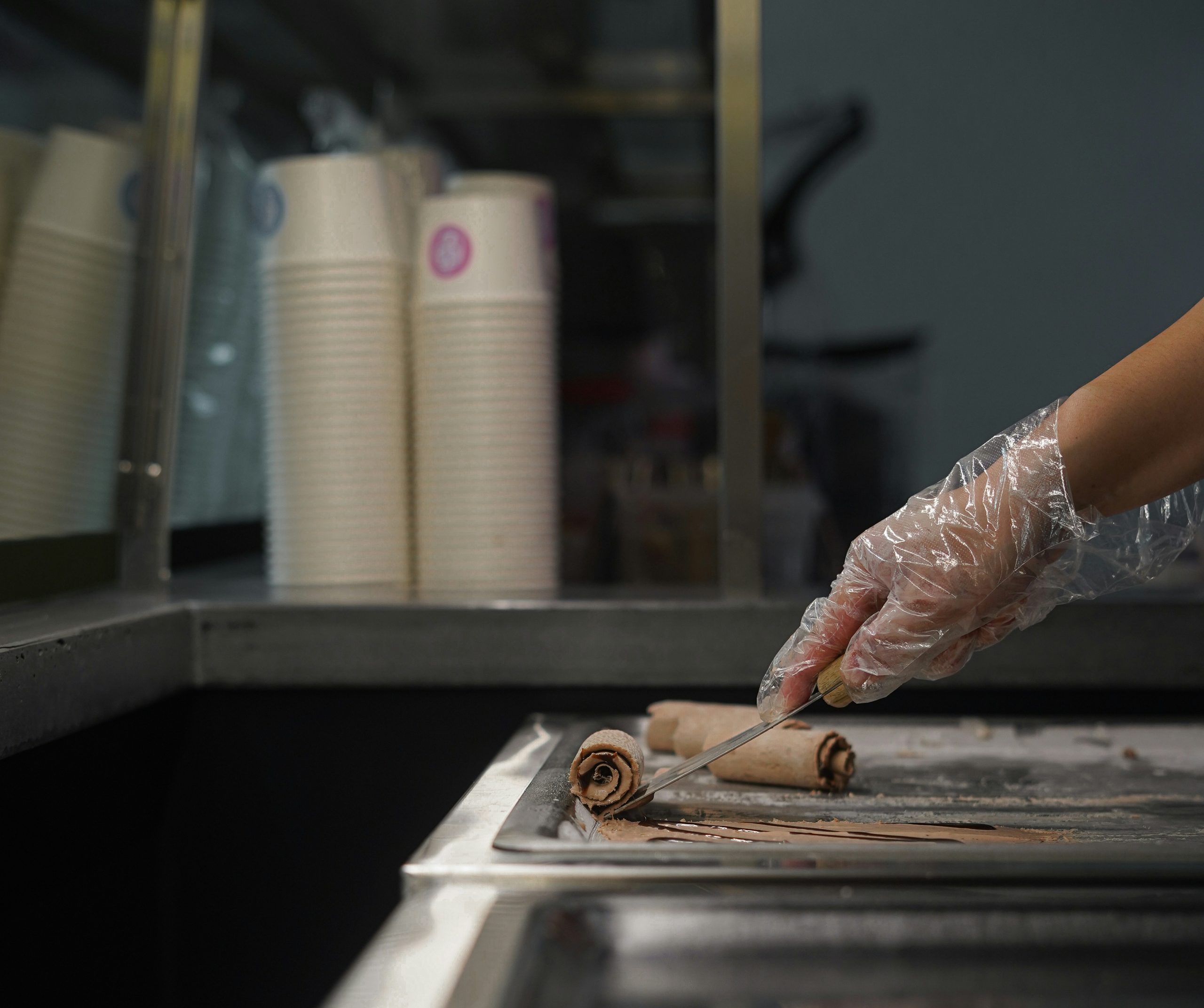
Rolled ice cream started in Southeast Asia, most commonly associated with Thailand, where street vendors pour a base of sweetened milk directly onto a steel surface chilled to well below freezing, sometimes as cold as negative twenty degrees Celsius. As the base hits the plate it starts freezing almost instantly, and the vendor chops in whatever mix-ins the customer wants directly on the surface, working the mixture with two flat metal spatulas the way a cook would work ingredients in a stir fry, which is exactly where the “stir-fried ice cream” name comes from. Once everything is evenly mixed and spread thin across the plate, the vendor uses the spatulas to scrape the frozen sheet up into tight little rolls, standing them on end in a cup like a small ice cream bouquet. It is genuinely satisfying to watch, which turns out to be a big part of why this dessert became such a phenomenon far outside of Thailand.
How a Street Food Became a Global Social Media Moment
Rolled ice cream had been a fixture of Thai night markets for a while before it exploded internationally, and the timing of that explosion is not exactly a coincidence. The dessert hit its stride right as short, visually satisfying videos became the currency of social media, and rolled ice cream is basically engineered for that format: colorful ingredients, a hypnotic scraping motion, and a payoff of neat little cream rolls fanned out in a cup. Ice cream shops built entirely around the rolled ice cream concept started popping up across the United States and elsewhere, often advertising the process itself as much as the flavors, since customers were just as interested in watching their dessert get made as they were in eating it. That is a genuinely unusual thing for a frozen dessert to pull off, since most ice cream is, by design, made somewhere you cannot see.
The Home Version Versus the Street Cart Version
Making rolled ice cream at home means giving up the negative-twenty-degree steel plate, obviously, since most of us do not have professional ice cream equipment sitting around the kitchen. The home workaround is straightforward: pour your cream and condensed milk mixture onto a rimmed baking sheet, keep the layer thin, freeze it solid for a few hours, and then use a metal spatula or even a clean paint scraper to push through the frozen sheet at an angle, which naturally curls it into rolls as you go. Some more ambitious home cooks go a step further and use dry ice pellets sandwiched between two baking sheets to more closely mimic the instant-freeze effect of the professional steel plate, though that requires temperature-safe gloves and a bit more caution than a Tuesday night dessert project usually calls for. I stuck with the simple freezer-and-baking-sheet method for my first attempt, and it worked well enough that I did not feel any pressing need to buy dry ice.
Flavor Variations Worth Trying
Once you have the basic technique down, rolled ice cream turns into an excuse to chop nearly anything into a cream base and see what happens. Classic shop flavors include Oreo cookies and cream, worked directly into the base until it turns speckled and dark, and matcha green tea, which gives the finished rolls a distinctive pale green color that photographs about as well as the dessert itself. Fruit-based versions built around mango, strawberry, or fresh berries lean lighter and brighter, while richer combinations bring in Nutella, chocolate shavings, or crushed peanut brittle for something closer to a candy bar in frozen roll form. Salted honey versions and mint chocolate chip riffs show up often too, and because the technique itself does not really change no matter what you are folding in, rolled ice cream ends up being one of the more forgiving frozen desserts to experiment with once you understand the basic mechanics. I would also gently suggest that seasonal fruit works better than you might expect here, since the cold plate technique tends to preserve bright fruit flavors a little more distinctly than a slow-churned base does, where flavors have more time to blend and mellow into each other.
Notes From My Sun Valley Kitchen
My biggest lesson making this at home was patience with the freezer step. The cream layer genuinely needs to be thin, closer to a quarter inch than half an inch, or it takes forever to freeze solid and the rolls come out clumsy instead of neat and tight. I also learned that a properly chilled bowl and spatula matter more than I expected, since a warm spatula just smears the frozen layer instead of cleanly scraping it into a roll. None of this is difficult, exactly, but there is a small learning curve between “watched forty videos of someone doing this perfectly” and “did it myself on the first try,” and I landed somewhere in between on attempt one.
Below is a short video showing the technique the way street vendors actually do it, which is worth watching even if you plan to use the simpler home method, since it makes the scraping motion much easier to picture.
Why I Keep Chasing Down Recipes Like This
People sometimes ask why I bother tracking down dessert techniques from halfway around the world instead of just sticking with whatever is easiest to make in a Southern California kitchen, and rolled ice cream is a pretty good answer to that question. It is not a dessert that evolved to solve the same problem as churned ice cream, since the whole point was never just “make something cold and sweet.” The rolling technique developed as its own distinct approach, valuing presentation and customization as much as flavor, and that is exactly the kind of culinary left turn worth paying attention to. If I only ever made desserts that were easy and familiar, I would never have ended up standing over a baking sheet with a metal spatula, weirdly invested in getting my rolls to look as tight as the ones from the videos.
If You Would Rather Watch Someone Else Make It
Rolled ice cream shops have become common enough in larger cities that plenty of people’s first experience with this dessert happens at a counter rather than a kitchen, and there is no shame in that. Watching a trained vendor work a steel plate with two spatulas, chopping in toppings and shaping rolls in a matter of seconds, is genuinely impressive in a way that a home cook working with a baking sheet and a freezer is never quite going to match. If you have a rolled ice cream shop nearby, it is worth a visit at least once just to see the process done properly before you try the home version yourself, if only so you have a realistic idea of what you are aiming for.
Why This One Is Worth the Effort
Most of the frozen desserts I chase down for this site are worth making because of how they taste. Rolled ice cream is a little different, because a huge part of the appeal is the process itself, and there is something genuinely fun about serving a dessert that doubles as a small kitchen performance. It also happens to taste exactly like a good, simple ice cream should, rich and sweet without being fussy, which means the theatrics are not covering for a mediocre base. If you have ever watched one of those videos and wondered whether it was worth trying at home without the fancy equipment, the answer, based on my Sun Valley kitchen experiment, is yes.