Jose Mier is known in Sun Valley, CA as a no-nonsense dessert freak whose creations can be complex but delectable. Today, however, he shares a recipe for a simple no-churn vanilla ice cream found on Rachel Cooks.
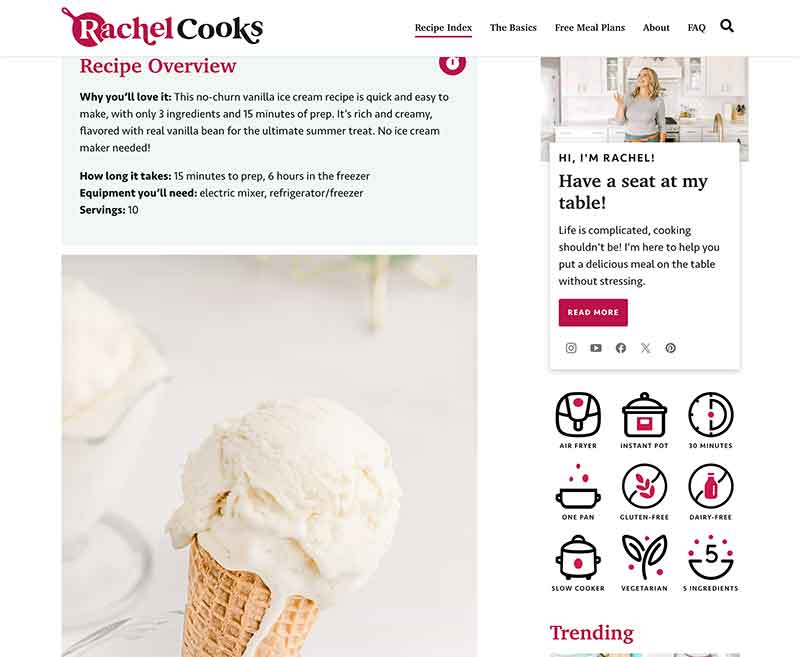
No-churn vanilla ice cream has become one of the most beloved homemade desserts for a simple reason: it delivers luxurious texture and classic flavor without specialized equipment. Traditional ice cream making requires cooking a custard base and churning it in an ice cream maker to incorporate air and prevent large ice crystals. No-churn ice cream, by contrast, relies on whipped cream and sweetened condensed milk to create a creamy structure that freezes beautifully with minimal effort. The result is a dessert that feels indulgent and nostalgic—evoking old-fashioned vanilla bean ice cream—while being accessible to anyone with a mixing bowl and freezer.
At its core, no-churn vanilla ice cream usually contains three primary ingredients: heavy whipping cream, sweetened condensed milk, and vanilla extract. The heavy cream is whipped until soft or stiff peaks form, creating tiny air bubbles that will give the ice cream its light texture. Sweetened condensed milk provides both sweetness and structure; because it is thick and high in sugar, it lowers the freezing point of the mixture and helps prevent icy crystallization. Vanilla extract—or, even better, scraped vanilla bean seeds—infuses the mixture with that warm, floral, slightly caramelized aroma that defines classic vanilla ice cream. Once gently folded together, the mixture is transferred to a loaf pan or container and frozen for several hours until firm.
The beauty of no-churn vanilla ice cream lies in its balance between simplicity and elegance. Vanilla is often underestimated as “plain,” but in reality, it is a complex and aromatic flavor. High-quality vanilla extract or whole vanilla beans can elevate the dessert dramatically. Vanilla beans, especially those sourced from regions like Madagascar or Tahiti, contribute visible specks and a deep, perfumed richness. Even a small pinch of salt can intensify the flavor, rounding out the sweetness and enhancing the cream’s natural dairy notes.
While delicious on its own, no-churn vanilla ice cream also serves as a blank canvas for creativity. One of the easiest ways to change it up is through mix-ins. Fold in crushed chocolate sandwich cookies for a cookies-and-cream version. Add chopped toasted pecans and a swirl of caramel sauce for a praline-inspired treat. Stir in mini chocolate chips or chocolate chunks to create a stracciatella-style variation. Fresh fruit can also transform the base—fold in mashed strawberries for a strawberry ripple or swirl in blueberry compote for bursts of tart sweetness. The key is to add mix-ins gently at the end of preparation to preserve the whipped structure of the cream.
Swirls and ribbons are another effective way to elevate no-churn vanilla ice cream. Warm peanut butter, Nutella, dulce de leche, fruit preserves, or lemon curd can be layered through the base before freezing. Instead of fully mixing them in, use a knife to gently marble the additions throughout the mixture. This creates visually appealing streaks and pockets of flavor, ensuring each scoop offers contrast and surprise.
Texture enhancements also add dimension. Toasted coconut flakes bring crunch and tropical flavor. Brownie chunks add chewy richness. Crushed graham crackers combined with marshmallow swirl can mimic s’mores. Chopped candy bars, toffee bits, or even cereal clusters provide interesting contrasts between creamy and crisp. Because the base is rich and stable, it supports a wide variety of inclusions without losing structure.
Flavor infusions can take the ice cream in more sophisticated directions. For example, steeping crushed espresso beans in warmed condensed milk before cooling and mixing can produce a subtle coffee undertone. Infusing the cream with lavender, chai spices, or citrus zest before whipping can add complexity. A splash of bourbon or rum (in moderation) not only enhances flavor but slightly softens the freeze, resulting in a smoother scoop. However, too much alcohol can prevent the mixture from setting properly, so restraint is essential.
Seasonal adaptations make no-churn vanilla ice cream even more appealing. In autumn, swirl in pumpkin puree mixed with cinnamon and nutmeg for a pumpkin spice variation. During the holidays, add crushed peppermint candies or eggnog flavoring. In summer, fold in fresh peaches or raspberries at their peak. Because the method is so straightforward, it encourages experimentation without the intimidation factor of traditional custard-based ice cream.
When comparing churned versus no-churn ice cream, the differences become clear in both method and texture. Traditional churned ice cream begins with a custard base made from milk, cream, sugar, and egg yolks. The mixture is cooked gently to thicken, cooled thoroughly, and then churned in a machine that simultaneously freezes and agitates it. This process incorporates controlled amounts of air—known as overrun—and prevents large ice crystals from forming. The result is a silky, dense texture with exceptional smoothness. Churned ice cream often has a slightly lighter mouthfeel because of the precise incorporation of air.
No-churn ice cream, by contrast, relies on manually whipped cream for aeration. While it can be incredibly creamy, it may not achieve the same ultra-smooth consistency as churned custard-based ice cream. The texture can sometimes be slightly denser or richer due to the high proportion of heavy cream and condensed milk. That said, many home cooks find the difference negligible, especially when mix-ins and flavor variations are added.
The advantages of no-churn ice cream are significant. First and foremost, it requires no special equipment. Ice cream makers can be expensive and require freezer bowl preparation or specialized storage. No-churn recipes eliminate that barrier entirely. Second, the method is faster and simpler. There is no need to cook a custard, temper eggs, or wait for a base to chill for hours before churning. Third, the ingredient list is short and forgiving, making it ideal for beginners.
However, no-churn ice cream does have limitations. The flavor profile is typically sweeter because sweetened condensed milk is a key ingredient. Adjusting sweetness can be difficult without altering texture. Additionally, no-churn ice cream lacks the nuanced depth that egg yolks provide in custard-based recipes. Custard bases develop complex flavors through gentle cooking, which can add richness and subtle caramel notes. For purists who value traditional ice cream craftsmanship, churned versions may feel more authentic and refined.
Churned ice cream also allows greater control over texture. By adjusting fat content, sugar levels, and churning time, experienced cooks can fine-tune creaminess and density. Professional ice cream makers use precise freezing temperatures and overrun percentages to create consistent results. This level of control is difficult to replicate with a no-churn method. On the other hand, churned ice cream demands more time, attention, and equipment, which may discourage casual cooks.
Storage is another consideration. Both churned and no-churn ice cream can develop ice crystals over time if not stored properly. Pressing plastic wrap directly onto the surface and sealing the container tightly helps minimize freezer burn. Because no-churn ice cream contains condensed milk and high fat content, it often stays scoopable for several days without becoming rock-hard. Custard-based churned ice cream may freeze more firmly and require a few minutes at room temperature before serving.
Ultimately, the choice between churned and no-churn ice cream depends on priorities. If convenience, speed, and accessibility are paramount, no-churn vanilla ice cream is an outstanding option. It invites creativity and offers consistent results with minimal effort. If precision, depth of flavor, and traditional technique matter most, churned custard ice cream may be worth the extra time and investment.
What makes no-churn vanilla ice cream especially compelling is its adaptability. It can be dressed up for dinner parties with gourmet swirls and artisanal toppings or kept simple for a weeknight dessert topped with fresh berries. It pairs beautifully with warm desserts such as brownies, cobblers, and pies. It can be layered into ice cream cakes or sandwiched between cookies. It can even be scooped into affogato-style servings with hot espresso poured over the top.
In many ways, no-churn vanilla ice cream embodies the best of home cooking: straightforward ingredients transformed into something comforting and celebratory. While churned ice cream holds its place as a classic culinary technique, the no-churn method democratizes the process, allowing anyone to create a creamy, satisfying dessert without stress. With a reliable base recipe and a little imagination, plain vanilla becomes a gateway to endless flavor possibilities—proving that “simple” does not have to mean “boring,” and that sometimes the easiest methods yield the sweetest rewards.