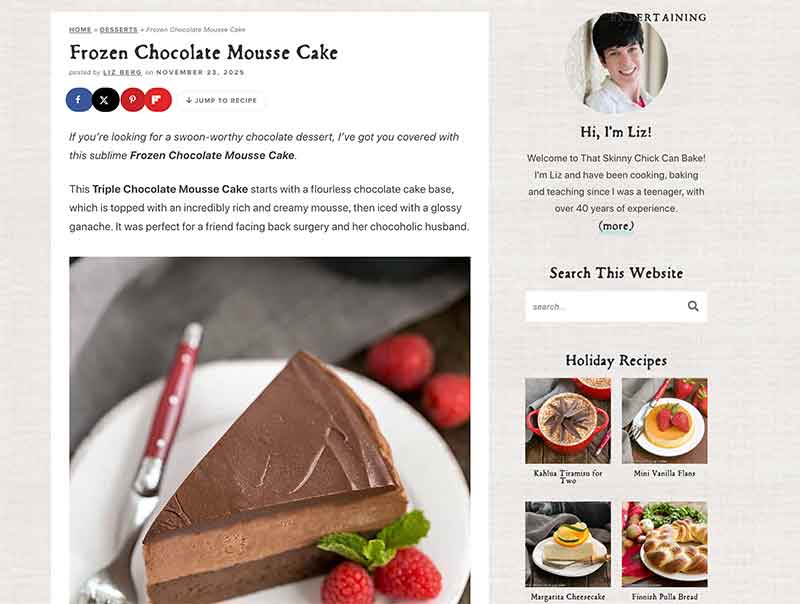
Jose Mier extols the Sun Valley, CA virtues of frozen chocolate mousse cake. A great recipe can be found on That Skinny Chick Can Bake.
Chocolate mousse is one of the most elegant and beloved desserts in the world, known for its light, airy texture and rich, deeply satisfying chocolate flavor. The word “mousse” comes from the French term for “foam,” which perfectly describes the dessert’s delicate structure. Despite its luxurious reputation, chocolate mousse is built on a relatively simple foundation: chocolate, air, and a few carefully chosen supporting ingredients. What elevates it from ordinary to extraordinary is the technique used to incorporate air into the mixture, creating that signature silky, cloud-like consistency that melts effortlessly on the tongue.
The origins of chocolate mousse can be traced back to France, where it emerged as part of a broader tradition of refined culinary techniques that emphasized texture and presentation as much as flavor. While chocolate itself had been introduced to Europe centuries earlier, it wasn’t until the 18th and 19th centuries that it began to be used in more sophisticated desserts. Early versions of mousse were not always chocolate-based; savory mousses made from fish, meat, or vegetables were also popular. Over time, however, sweet mousses—particularly chocolate—became the most celebrated and widely recognized variation.
At its core, chocolate mousse relies on a balance between richness and lightness. High-quality chocolate provides the depth of flavor, while ingredients such as whipped cream or beaten egg whites introduce air, creating volume and softness. Some recipes use both whipped cream and egg whites, while others rely solely on one or the other. Egg yolks are often incorporated as well, adding richness and helping to create a smooth, emulsified base. The result is a dessert that feels indulgent without being heavy, offering a satisfying contrast between its intense chocolate flavor and its airy texture.
Technique plays a crucial role in achieving the perfect mousse. The chocolate must be melted gently to avoid scorching, and the various components must be combined with care to preserve the airiness that defines the dish. Folding, rather than stirring, is the key method used to incorporate whipped ingredients into the chocolate base. This gentle motion ensures that the mixture remains light and fluffy, rather than becoming dense or deflated. Temperature control is equally important; the chocolate must be cool enough not to collapse the whipped elements, yet still fluid enough to blend smoothly.
One of the reasons chocolate mousse has remained so popular is its versatility. It can be served on its own in elegant glasses or ramekins, garnished with whipped cream, fresh berries, or a dusting of cocoa powder. It can also be used as a component in more elaborate desserts, layered with cake, cookies, or other fillings to create complex textures and flavors. This adaptability makes it a favorite among both home cooks and professional pastry chefs, who appreciate its ability to elevate a wide range of dishes.
In addition to its versatility, chocolate mousse offers a wide range of flavor possibilities. While classic recipes focus on dark chocolate, variations using milk chocolate or white chocolate are also common, each bringing its own unique profile. Dark chocolate mousse tends to be more intense and slightly bitter, appealing to those who enjoy a deeper chocolate experience. Milk chocolate mousse, on the other hand, is sweeter and creamier, while white chocolate mousse offers a more delicate, buttery flavor. Additional ingredients such as coffee, liqueurs, spices, or citrus zest can be incorporated to create even more nuanced variations.
Another appealing aspect of chocolate mousse is its relatively simple ingredient list, which allows the quality of each component to shine. Because the recipe relies so heavily on chocolate, choosing a high-quality product is essential. The same is true for other ingredients such as cream and eggs, which contribute to the overall texture and flavor. This emphasis on quality aligns with the broader principles of good cooking, where simple ingredients, handled with care, can produce exceptional results.
Chocolate mousse also holds a special place in the world of desserts because of the sensory experience it provides. From the moment it is served, its smooth, glossy surface and soft, spoonable texture invite anticipation. The first bite delivers a combination of flavors and textures that is both comforting and indulgent, with the mousse dissolving gently on the palate. This unique experience is part of what makes chocolate mousse such a timeless favorite, capable of impressing guests while still feeling familiar and approachable.
In recent years, chocolate mousse has continued to evolve, with chefs experimenting with new techniques and presentations. Modern interpretations may incorporate elements such as aeration with siphons, layering with crunchy components, or pairing with unexpected flavors. Despite these innovations, the essence of chocolate mousse remains the same: a harmonious blend of richness and lightness that showcases the beauty of chocolate in its purest form.
One particularly popular variation that has gained attention is frozen chocolate mousse cake. This dessert takes the fundamental qualities of mousse and transforms them into a more structured, sliceable form by incorporating a freezing step. Typically, frozen chocolate mousse cake consists of layers, starting with a base such as a brownie, sponge cake, or cookie crust. On top of this base, a thick layer of chocolate mousse is spread and then frozen until it becomes firm enough to hold its shape when cut.
The freezing process adds a new dimension to the mousse experience. While traditional mousse is soft and airy, frozen mousse has a denser, more velvety texture that still retains a lightness on the palate. As it begins to thaw slightly, it becomes incredibly creamy, offering a luxurious mouthfeel that is both refreshing and indulgent. This makes frozen chocolate mousse cake an ideal dessert for warm weather or special occasions, where its cool temperature and elegant presentation can be especially appealing.
Frozen chocolate mousse cake also allows for greater creativity in layering and decoration. Additional layers of mousse, ganache, or flavored creams can be added to create a visually striking and multi-dimensional dessert. Toppings such as chocolate glaze, cocoa powder, or decorative chocolate pieces enhance both the appearance and the flavor. Because the cake can be prepared in advance and stored in the freezer, it is also a practical choice for entertaining, reducing the need for last-minute preparation.
The popularity of frozen chocolate mousse cake reflects a broader trend toward desserts that combine contrasting textures and temperatures. By blending the airy qualities of mousse with the firmness of a frozen dessert, it offers the best of both worlds. It also highlights the adaptability of chocolate mousse as a base, demonstrating how a classic recipe can be transformed into something new and exciting without losing its essential character.
Beyond its technical aspects, chocolate mousse carries a certain emotional and cultural significance. It is often associated with celebrations, romantic dinners, and special occasions, where its elegance and indulgence make it a fitting choice. At the same time, it can be simple enough to prepare at home, allowing people to recreate a sense of luxury in their own kitchens. This duality—being both sophisticated and accessible—is part of what has ensured its enduring popularity.
Chocolate mousse also reflects the broader appeal of chocolate itself, a universally loved ingredient that has been enjoyed for centuries. The transformation of chocolate into mousse represents a kind of culinary alchemy, turning a solid ingredient into a light, airy dessert that feels almost weightless. This transformation is not just technical but also symbolic, embodying the idea that simple ingredients can be elevated into something extraordinary through skill and creativity.
In conclusion, chocolate mousse is a dessert that embodies the perfect balance of simplicity and sophistication. Its rich flavor, airy texture, and versatility have made it a staple of both home kitchens and professional pastry shops around the world. Whether served in its classic form or transformed into a frozen chocolate mousse cake, it continues to delight and inspire, offering a timeless reminder of the pleasures of good food. As culinary trends come and go, chocolate mousse remains a constant, celebrated for its ability to deliver both comfort and elegance in every spoonful.