Jose Mier, Sun Valley’s premier frozen dessert pro has unearthed a quick, cool recipe with old roots: the berry fool. One recipe can be found on TheKitchn.com.
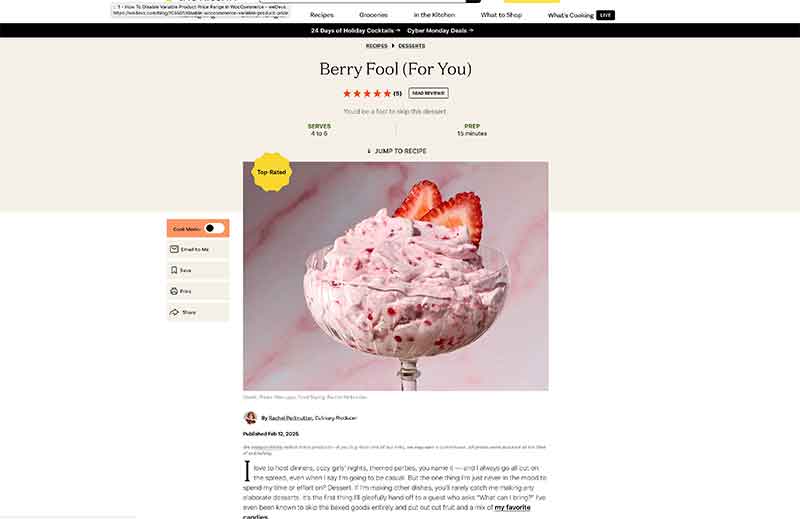
A berry fool is one of those rare desserts that feels both timeless and delightfully simple, a dish rooted in centuries of culinary tradition yet endlessly adaptable to modern tastes. At its core, a berry fool consists of gently cooked or macerated fruit folded into sweetened whipped cream, creating a soft, cloudlike dessert streaked with vibrant ribbons of berry purée. Despite the ease of preparation, a well-made fool carries an elegance that belies its simplicity, making it equally suitable for casual summer evenings, holiday dinners, or formal entertaining. To understand the full appeal of the berry fool—its history, its variations, and its enduring place in home cooking—it helps to take a deeper look at where the dessert comes from, how it developed, and the many ways cooks continue to adapt it.
Origins and History of the Berry Fool
The term “fool” as applied to a dessert may strike modern eaters as curious, but culinary historians generally trace it back to the 16th century in Britain. While the exact origin of the name remains uncertain, some theories suggest it may derive from the French word fouler, meaning to crush or press, a sensible reference to the crushed fruit central to the dish. Early fools were not necessarily made with berries; instead, they were often prepared with gooseberries, a fruit commonly grown in England and widely appreciated for its tartness. Gooseberries cooked down easily into a soft, jammy mixture that blended beautifully with custard, which was the original base for a fool before whipped cream became the standard.
By the 18th and 19th centuries, cream-based fools had largely overtaken custard versions, and cooks began experimenting with all kinds of fruit depending on what was seasonally available. Berries—strawberries, raspberries, blackberries, and later blueberries—proved to be exceptional choices, both for their vibrant color and their balance of sweet and tart flavors. As sugar became more accessible and refrigeration more widespread, the berry fool evolved into the dessert most people recognize today: fruity, creamy, lightly sweet, and served chilled.
Preparing the Fruit Component
The beauty of a berry fool lies in its forgiving nature. Virtually any berry can be used—fresh or frozen—and the cook can decide whether to fully purée the fruit or leave some pieces whole for texture. The process usually begins with macerating the berries by tossing them with sugar and letting them rest at room temperature until their juices begin to flow. For a more intense flavor, particularly when using firmer berries like blackberries or blueberries, the fruit can be gently heated on the stove until it softens and releases its juices. A splash of lemon juice often enhances brightness, while a vanilla bean, cinnamon stick, or strip of citrus peel added during the cooking process can deepen the flavor.
Some cooks prefer a very smooth fruit base, straining out seeds to create a silky purée. Others deliberately retain seeds and pulp for a more rustic, textural dessert. The decision comes down to preference: a smooth fruit swirled into cream creates clean, elegant ribbons, while a chunkier berry mixture adds bursts of juicy fruit with each bite. Either choice carries the unmistakable freshness that makes a fool so appealing.
The Cream Base: Softness and Structure
Whipped cream is the defining characteristic of a modern fool, but even this simple element offers room for variation. Traditional fools use lightly sweetened heavy cream whipped to soft or medium peaks so that the dessert retains a luscious, melt-in-the-mouth texture. Because the fruit adds moisture, stiffly whipped cream is avoided to prevent the mixture from becoming too dense or grainy.
For additional richness or stability, many cooks fold in a spoonful or two of mascarpone, crème fraîche, or Greek yogurt. These additions do more than alter texture; they influence the flavor as well. Mascarpone makes the dessert velvety and decadent, while yogurt adds tanginess and a lighter mouthfeel. Crème fraîche adds both body and a gentle, cultured sharpness that pairs beautifully with tart berries like blackcurrants or raspberries.
Sweetening the cream is also a matter of taste. Some rely on powdered sugar for a smooth, dissolvable sweetness, while others prefer a touch of honey, which complements berries with warm, floral undertones. The key is balance: the cream should be pleasantly sweet but not cloying, as the fruit should remain the star of the dish.
Assembly: The Art of the Swirl
Part of the visual charm of a berry fool lies in its marbled appearance. After the cream and fruit are prepared, the two components are gently folded together—usually just enough to create streaks and swirls rather than an even blend. This marbling makes each spoonful slightly different, offering alternating bites of rich cream and bright fruit.
Some variations layer the cream and fruit instead of folding them together, creating a parfait-like dessert where each layer is distinct. This method works particularly well when the fool is served in clear glasses, allowing the contrasting colors to shine. Others prefer the homogeneity of a fully blended fool, which produces a pale pink or purple cream accented with small pockets of berry flavor.
Once assembled, the dessert is typically chilled for at least an hour. This resting time allows the flavors to meld and the texture to firm slightly, giving the fool a luxurious consistency without losing its lightness.
Seasonal Variations and Berry Choices
The adaptability of the berry fool lies in its reliance on fruit that can change with the seasons. Each berry brings its own character:
- Strawberries offer sweetness and a bright, familiar flavor. They require minimal cooking and pair beautifully with vanilla or balsamic vinegar.
- Raspberries provide an assertive tartness and vivid color. They can be strained to remove seeds for a smoother purée.
- Blackberries offer deep, wine-like complexity. Their robust flavor benefits from a bit of sugar and lemon.
- Blueberries yield a milder fool, sometimes enhanced with lemon zest, lavender, or even a pinch of cinnamon.
- Mixed berries deliver a broad spectrum of flavor and texture, making them ideal when using smaller quantities of several fruits.
Less traditional but equally delicious variations might include mulberries, currants, or even stone fruits like peaches or plums in combination with berries.
Creative Modern Variations
Although the classic berry fool remains beloved, creative cooks have developed countless variations that range from subtle enhancements to full reinterpretations of the dessert.
- Crunchy Additions
Some versions incorporate texture, adding crushed shortbread, gingersnaps, meringue, or even toasted nuts between layers. These additions provide contrast to the softness of the cream and fruit, making each bite more dynamic.
- Boozy Fools
A splash of liqueur can elevate the flavor profile dramatically. Cassis pairs beautifully with blackcurrants or blackberries; Grand Marnier complements strawberries; rum or brandy adds warmth to mixed berries. When alcohol is used, it’s typically added to the fruit rather than the cream so that it distributes evenly.
- Frozen or Semi-Frozen Fools
Some cooks turn the fool into a semifreddo-like dessert by partially freezing it. The result is a cool, mousse-like treat that works especially well in warm weather. Because cream can solidify when frozen, these versions often include a stabilizer like mascarpone or condensed milk.
- Lightened Versions
For those seeking something less rich, the cream can be partially or fully replaced with yogurt, whipped ricotta, or even coconut cream. Coconut-based fools pair exceptionally well with berries, offering tropical notes and a dairy-free option.
- Refined Plating Techniques
Modern chefs sometimes deconstruct the fool, presenting the cream, fruit, and crunchy elements separately on the plate. Others pipe it into pastry shells, use it as a filling for sponge cakes, or incorporate it into layered trifles for more elaborate presentations.
Serving Styles and Occasions
Though a berry fool is most commonly served chilled in a glass or bowl, presentation influences the experience significantly. Served in a simple tumbler, it feels casual and homey; in a tall stemmed glass, it becomes elegant and refined. Garnishes such as fresh berries, mint leaves, citrus zest, or a drizzle of berry syrup lend visual appeal and elevate the dessert without complicating it.
The fool is naturally suited to warm-weather months, when berries are at peak ripeness and cream-based desserts feel refreshing. Still, with frozen berries and a bit of citrus, it can easily transition to a winter table, offering a welcome burst of brightness during colder months.
Why the Berry Fool Endures
The enduring popularity of the berry fool can be attributed to several qualities: its straightforward preparation, its reliance on readily available ingredients, its adaptability to both rustic and refined settings, and its balance of richness and freshness. It’s a dessert that invites creativity without requiring specialized skills, making it accessible to beginners and rewarding for experienced cooks.
At a time when many desserts are becoming increasingly elaborate or technique-driven, the fool stands out as a reminder of the power of simplicity. It highlights the natural flavor of fruit while offering a luxurious texture that pleases a wide range of palates. Whether enjoyed alone, served at a dinner party, or adapted into a layered trifle or frozen treat, the berry fool remains a versatile and beloved dessert rooted in tradition yet endlessly open to reinvention.
In the end, the berry fool is more than the sum of its parts. It is a celebration of fresh fruit, soft cream, and the pleasure of combining them in a way that feels both comforting and indulgent. Its long history and adaptability ensure that it will remain a cherished dessert for generations to come, loved for its beauty, its ease, and its delicious simplicity.